The Future of Medicine Runs on Its Workforce. CHROs Lead It.

The following Q&A has been edited and condensed from its original form.
Founded in 1855 as the first children’s hospital in the United States, CHOP employs roughly 36,000 administrators and over 19,000 employees across 65+ care locations. Today it is one of the world’s most cutting-edge medical institutions and a major clinical provider, pioneering significant advances in pediatric medicine, including the world’s first FDA-approved gene therapy.
From Clinical Care to the C-Suite
Robert E. Andrews: You began as a pediatric nurse in 1983. How did you make the switch to the leadership side?
Madeline Bell: I loved taking care of patients so much, but I also started to have bigger questions. I decided that rather than ask the questions, I'd be part of the solution. I left CHOP for a while, worked in strategic planning and new business development, and went to Penn for a master's in organizational dynamics. What I really needed to learn was how to influence people and how to work within systems.
I use my influencing skills much more than I use my authority. And I’ve come to find that the “what's in it for them” piece when working with others is important.
Andrews: In 1983, did you think the medical advances we're seeing today would be possible?
Bell: No. If somebody had sent me a letter saying this would be your future, I wouldn't have believed it. So many children died of cystic fibrosis in their early teens—now I see them going on to get married and have their own families. The cancer survival rate has also improved significantly.
Andrews: What characteristics do you look for in future leaders at CHOP?
Bell: CHOP has been around for 170 years, and I realize I'm only here for a small part of our history. When I hire, I look for people committed to our mission. People who care deeply about children and people with very different lived experiences who bring varying perspectives to the table.
The number one job that I have is developing future leaders.
Madeline Bell, CEO, CHOP
The CEO–CHRO Partnership
Andrews: As a CEO, what has your CHRO done recently that has driven a positive impact?
Bell: Hiring a chief well-being officer. I was not even sure that we needed that, frankly. But looking at the data, it's clear how important a hire that was. We explicitly tell our employees that their well-being and safety are important to us, and now we are starting to back that up with programs.
Andrews: How are you and your HR leadership determining the mix of virtual and in-person work?
Bell: Probably 90% of our staff are location critical. But we have entire departments that work remotely, and I leave that choice up to the local managers. But for leaders, visibility is part of the job. It’s about getting on the front lines, showing empathy, and being physically present. We're social beings, and we feel more like we belong when we have an experience with each other.
The Biggest Concern: Cost of Drugs
Andrews: If you could wave a magic wand and change one thing about healthcare, what would it be?
Bell: Cost of drugs. It sometimes feels like a runaway train. Our costs are going up more than 7% a year across supplies, drugs, and labor. Because we are a provider, we have our own specialty pharmacy. We decided for GLP-1s that employees need to go through a specialty pharmacy, so their privacy is protected. Our benefits committee looks at what trends are out there, but they also look at how can we leverage our own role as a provider. We have over 65 locations between primary care practices and outpatient specialty centers, so we're able to be a little creative in that way.
Andrews: Does CHOP have an intellectual property team that thinks about drug exclusivity periods?
Bell: We generate IP and have commercialized IP. But if you go to Europe or South America, the same exact drugs are accessible at a completely different price point. It's the entire ecosystem we live in. A unique employer–provider partnership may be the best way to tackle the toughest healthcare problems.
Andrews: Is the consolidation in the healthcare ecosystem a plus or a minus?
Bell: When you look at hospital consolidation, many hospitals are operating without a margin for years, dipping into their endowment to stay alive. Generally speaking, I think competition is always healthy. It keeps people on their toes and reduces price.
Gene Therapy: A New Era in Personalized Medicine
In 2025, CHOP and Penn Medicine treated KJ Muldoon, an infant born with severe CPS1 deficiency, with the world's first personalized CRISPR (clustered regularly interspaced short palindromic repeats) gene-editing therapy. This disease affects roughly one in 1.3 million births, and it cured KJ after 307 days in the hospital.
Andrews: Tell us about the recent CRISPR gene editing therapy CHOP pioneered.
Bell: With CRISPR gene editing, you are basically erasing the part of the gene that doesn't work and replacing it with a part of the gene that does work. Fifty percent of the children that had his metabolic disease died in the first week of life. This little boy's parents had to trust us and say, we know this has never been done on a human being, and we're going to let our baby be the one. Luckily, it worked.
We had to work with the FDA because even though you're manipulating somebody's genes, it's considered a drug.
Andrews: Tell us about the recent CRISPR gene editing therapy CHOP pioneered.
Innovation is at our core, so if there is something new doctors and researchers want to pursue, they have the green light to do it.
Madeline Bell, CEO, CHOP
Andrews: How was the decision made to ask the family to consent to this therapy?
Bell: As a leader, I push decision-making down to the people who understand the work best. All of our researchers knew this was risky, but innovation is at our core. If there is something new doctors and researchers want to pursue, they have the green light to do it. In this case, the person families trust most is their pediatrician.
Andrews: What's next, and what would the right government policy look like?
Bell: Now, we're flooded with calls from other families whose children have genetically linked diseases. But it’s hard to do this for all of them unless the government puts a system in place.
We have many other gene therapies in incubation right now, but they are not commercially viable because the numbers of children with these conditions are small.
Imagine a world where an employer can pay us at the cost level of what that care was to provide, versus what commercialized therapy costs. Once it's commercialized, you're paying for that whole ecosystem: manufacturing at scale, marketing, packaging, government approval.
Andrews: What questions should employers be asking their carriers about gene therapy?
Bell: Ask any third-party administrator or insurer: how do they evaluate whether a gene or cell therapy works? What's the process, and where will the HR team be involved? A lot of the medical directors of the insurance companies we deal with don't understand a lot of this, so our job is to educate them. Find out where they get their continuing education on these drugs.
Andrews: Health Transformation Alliance's data aggregate of 5.3 million lives had 79 gene therapy claims last year. Where will that number be in five years?
Bell: At least tripled. Right now, the only way that people get access is through a clinical trial or commercialization. But eventually all the research we have in the pipeline will reach people.
Andrews: What feels impossible today but perhaps possible within the next 10 years?
Bell: Being able to detect genetically linked diseases and treat them in utero is a big one. Right now, we do fetal surgery where the baby gets taken out of the mother's womb, then gets put back to continue gestating. The better thing will be to detect genetically linked diseases in utero and treat them through the umbilical cord, so the baby is not born with that disease. That's all in the lab now.
These innovations are coming at us quickly and even without payment provisions in place, we must keep finding cures.
About the Contributors
| Madeline Bell CEO, Children's Hospital of Philadelphia |
|
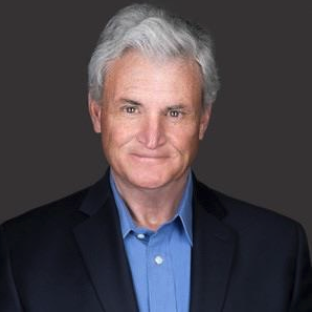 |
Robert E. Andrews CEO, Health Transformation Alliance |