Governments worldwide are introducing or strengthening rules that require employers to reduce heat-related risks. For instance, Japan just strengthened its workplace heatstroke prevention rules.
Our take: Extreme heat is no longer solely an environmental or safety concern. It has become a workforce risk management issue, affecting employee health, productivity, business continuity, and regulatory compliance. HR, legal, EHS, and operations leaders should incorporate heat risk into workforce planning, particularly in construction, logistics, manufacturing, agriculture, field service, and other outdoor or high-temperature environments.
The business case: Record-high temperatures are driving higher rates of illness, absenteeism, and hospitalizations and reducing productivity. Research also suggests that prolonged heat can worsen stress, anxiety, and other mental health conditions.
A recent Harvard Business Review article found many organizations still underestimate workforce vulnerability, particularly for office-based employees during extreme heat events.
A snapshot of how governments are responding:
|
|
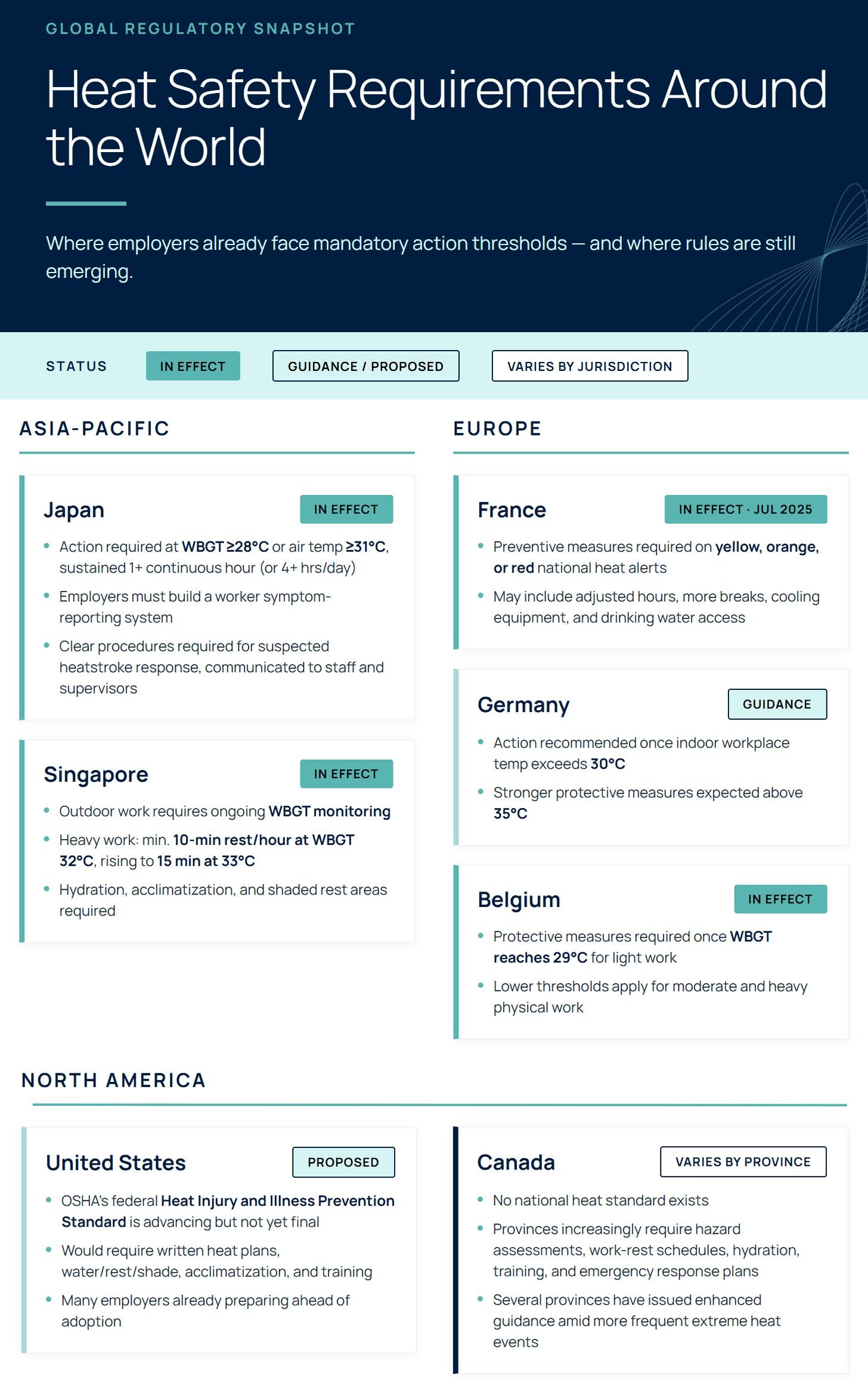
Source: National regulatory agencies and published employer guidance. Requirements evolve — confirm current thresholds with local counsel before acting.
For multinational employers, leading practice extends beyond regulatory compliance. CHROs and HR professionals should:
-
Assess workforce vulnerability
-
Monitor heat conditions
-
Provide hydration and cooling measures
-
Adjust work schedules where appropriate
-
Train managers to recognize heat illness
-
Establish clear emergency response procedures
-
Consider flexible work schedules and cooling strategies for office environments
As heat-related regulations continue to intensify, organizations that proactively integrate heat risk into workforce governance will be better positioned to protect employees and maintain operations.
