In a moment of intense political and reputational pressure, the importance of attracting and retaining the best talent is a top priority. Doing so requires building and sustaining a workplace culture that can work for everyone.
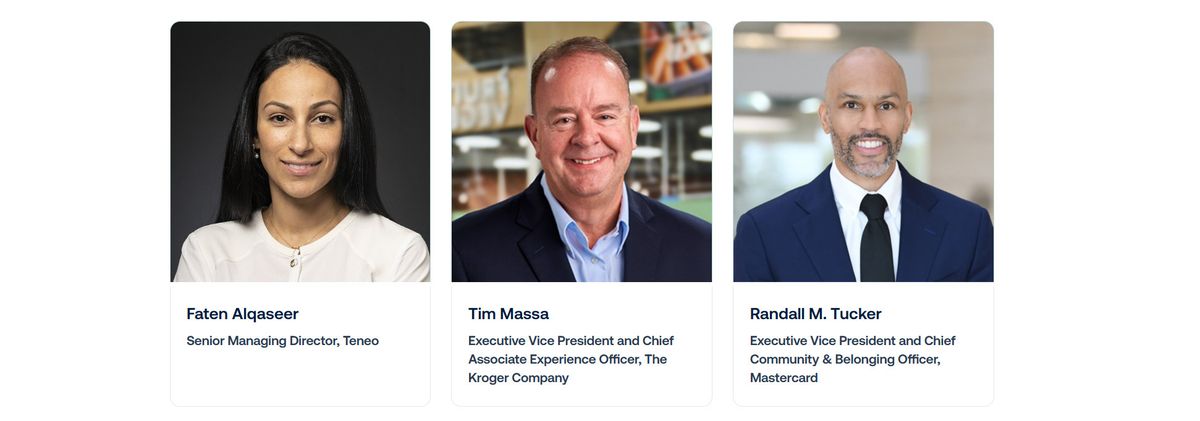
In our recent webinar “Building a New Era of Belonging,” moderated by our General Counsel Greg Hoff, CHROs and experts shared how companies can achieve this across recruitment, development, culture, and engagement.
|
|
Ahead of the webinar, we surveyed members about the current state of play on workplace inclusion and belonging approaches.
Survey Results:
-
82% of respondents (mostly government contractors) reported no lawsuit or shareholder action related to inclusion and belonging during the past two years.
-
Roughly 4 in 10 respondents were asked to certify compliance with executive orders addressing potentially discriminatory programs.
-
52% have become less vocal publicly while leaving programs unchanged.
-
Despite the pullback, 70% plan to continue external community events (such as Hispanic Heritage Month, Back Black Expo, AAPI community partnerships), and 41% are embedding inclusion initiatives into broader talent, leadership, and culture functions.
Insights from the Experts
For Teneo’s Faten Alqaseer, the perceived risk of many inclusion and belonging programs—particularly initiatives such as diverse slates, tying outcomes to pay etc. is higher than the actual amount of legal actions businesses have seen.
Kroger’s Tim Massa said CHROs can help CEOs and boards “cut through the noise” by focusing on what employees are concerned about and what matters to the company.
-
Massa’s team hosted listening groups where executives tuned in for true understanding rather than defending a given position. “You’re never going to get everyone to agree 100%,” Massa said. “But explaining why helps.”
Mastercard’s Randall Tucker shared how to get around the stigma of “diverse hires who are thought of as here to fill a quota,” which can create cultural friction.
-
“Our approach has always been making the systems inclusive from the start, so we are not privileging one group over another.”
-
The company has expanded their ERG program from 9 to 24 groups so “people can connect with people who are like them.”
How to Navigate This Moment:
-
Treat inclusion as an enterprise-operating discipline, not a stand-alone HR initiative.
-
Build “inclusion thinking” into everyday systems of the business—using representation data as a diagnostic, and connecting belonging efforts to measurable outcomes.
-
As the external environment evolves, talent and inclusion efforts should be shaped by cultural pillars and business needs.
